
Master the Art of Winning at Blackjack, Roulette, and Slots
Tired of predictable entertainment that offers no real thrill? Casino games provide a rush of adrenaline with every spin, shuffle, and roll of the dice. You simply place a bet, choose your game—like blackjack, roulette, or slots—and rely on a mix of strategy and chance for instant rewards. This direct path to potential payouts transforms idle time into an electrifying chase for victory.
Mastering the House Edge: Core Mechanics of Modern Gambling
The dealer’s hand flips blackjack, and the pit boss watches your face fall. You’ve just felt the house edge—a mathematical gap built into every bet, not luck. Real mastery begins when you stop chasing wins and start measuring risk per spin. On a double-zero roulette wheel, the house holds 5.26%; on a pass-line craps bet, it’s 1.41%. Why do basic strategy blackjack players still lose over time? Because the house edge grinds at 0.5% on perfect play—every hand you push, that tiny percentage slowly empties your stack. The core mechanic isn’t beating the odds; it’s surviving them longer than the casino expects, using lower-edge games and flat bets to stretch your session against the built-in decay.
Understanding Return to Player (RTP) Percentages and Volatility
Understanding Return to Player (RTP) Percentages and Volatility is essential for navigating a slot’s true payout rhythm. RTP, a theoretical percentage of wagered money returned over infinite spins, sets your long-term expectation; a 96% slot keeps six cents per dollar on average. However, volatility dictates how those returns arrive. Low-volatility games deliver frequent small wins, preserving your bankroll for longer play sessions, while high-volatility titles offer rare but massive payouts, risking long dry spells for that one life-changing spin. Matching your risk tolerance and session goals to these two metrics transforms random luck into a calculated, strategic approach.
How Random Number Generators Shape Every Spin and Shuffle
Every spin of a slot reel or virtual shuffle of a digital deck hinges on a Random Number Generator, a continuous algorithm that produces thousands of numbers per second. The millisecond you click « spin, » the RNG locks onto a specific number, instantly translating it into a unique reel position or card combination. This ensures no outcome influences the next, making past results irrelevant for predicting future spins. Whether triggering a bonus round or dealing a blackjack hand, the RNG dictates the precise sequence that determines your win or loss in real time.
- Each spin locks an RNG output at the exact moment you press the button, making timing crucial for results.
- In video poker, the RNG reshuffles a 52-card deck after every hand, ensuring no pattern can be tracked.
- Progressive jackpots rely on the RNG to randomly assign one spin as the winner, regardless of bet size or play history.
The Mathematics Behind Payout Structures and Jackpot Probabilities

Payout structures are derived directly from the game’s true odds, with the house edge embedded as the difference between the true probability of an event and the payout ratio offered. For fixed-odds games like slots, the jackpot probability is a function of the product of independent symbol probabilities across all reels, often yielding odds of millions to one to justify a massive progressive prize. The mathematical expectation of any bet equals the sum of each payout multiplied by its exact probability; a jackpot’s contribution must be carefully balanced against low-tier wins to sustain the game’s long-term return-to-player (RTP) percentage.
Q: Why do progressive jackpot odds shift as the prize grows?
A: The underlying hit frequency remains fixed—the probability of hitting the winning combination never changes—but the expected value of the bet increases linearly with the jackpot amount, eventually surpassing a negative expectation when the prize is artificially inflated above its actuarial break-even point.

Strategic Approaches to Classic Table Offerings
A winning strategic approach to classic table offerings hinges on exploiting mathematical edges and psychological discipline. At blackjack, mastering basic strategy charts and card counting shifts the house advantage in the player’s favor, turning a game of chance into a calculated duel. For craps, smart players stick to pass-line and come bets with maximum odds, avoiding high-house-edge prop wagers. Baccarat demands pattern recognition and betting on banker, which statistically wins more often than player. Roulette success requires strict bankroll management and focusing on European wheels with single zero. Strategic approaches to classic table offerings always prioritize game selection, bet sizing, and knowing when to walk away, transforming casual play into a dynamic, controlled session.
Blackjack Variations and the Art of Card Counting Basics
Blackjack variations alter rules to affect basic card counting strategies. In European Blackjack, the dealer receives only one card until players act, preventing the classic hole-card exposure that counters exploit. Spanish 21 removes all 10s from decks, requiring a shifted Hi-Lo running count to adjust for the decreased tens density. For card counting basics, a player first assigns values like +1 (2–6), 0 (7–9), −1 (10-Ace). The true count is then calculated by dividing the running count by the estimated remaining decks. This figure dictates deviation from basic strategy, such as increasing bet size or taking insurance when the true count is high. Essential steps include
- maintaining a silent running count
- estimating deck penetration
- dividing to find the true count
- adjusting bets and plays accordingly.
Roulette Wheel Dynamics: Inside vs. Outside Bets Explained
Roulette wheel dynamics hinge on the probability distribution between inside vs. outside bets. Inside bets, placed on single numbers or small groups, offer higher payouts (up to 35:1) but carry a low win probability due to the house’s 5.26% edge on a double-zero wheel. Outside bets—red/black, odd/even, or high/low—cover nearly half the layout, sacrificing payout ratios (1:1) for a near 50% chance of winning each spin. The physical spin and ball deceleration are identical for both; only the bet placement and payout structure differ, directly affecting short-term variance.
Inside bets maximize risk for high reward; outside bets prioritize frequent, smaller wins through broader coverage of the wheel’s numbers.
Craps Etiquette and Smart Betting on the Pass Line
When you step to the rail, pass line betting basics demand you wait until a new shooter is selected before placing chips on the felt. Always toss cash to the stickman softly, saying « pass line, » never grabbing dice from the center. The pass line’s low house edge rewards patience; adding odds behind your bet shrinks the casino’s advantage to near zero. Avoid aggressive horn bets until you master the flow—celebrate wins without slowing the game. Respect the shooter’s rhythm: don’t interrupt mid-roll or touch the layout when the puck is ‘on.’ Smart pass line play means hedging only with come bets, never chasing streaks with desperate props.
| Craps Etiquette | Smart Betting |
|---|---|
| Wait for dice to be offered | Always back pass line with odds |
| Place chips, don’t throw them | Limit prop bets to 10% of bankroll |
| Celebrate politely | Increase bets only after two wins |
Baccarat’s Low House Edge: Why Banker Bets Dominate
In Baccarat, the Banker bet offers a house edge of just 1.06%, making it the statistically superior wager over the Player bet’s 1.24%. This slim margin stems from the fixed drawing rules that slightly favor the Banker hand. While a 5% commission is deducted on Banker wins, the lower edge still pays off over time. To maximize your session, stick mainly to the Banker—the lowest house edge in Baccarat means you’re effectively bleeding less to the casino per hand, letting your bankroll stretch further.
- Banker wins more often than Player due to the third-card rules.
- A 5% commission barely offsets the 1.06% edge advantage.
- Avoid the Tie bet—its house edge exceeds 14%.
- Consistent Banker bets reduce long-term losses significantly.
Navigating Digital Reels and Progressive Jackpots
The thrill of chasing a life-altering win begins with navigating digital reels and progressive jackpots, where every spin is a step into a shared prize pool. As you sit at the virtual slot machine, the reels spin with symbols that might trigger the jackpot round—a moment when the game’s algorithm selects a random seed across all connected players.
True mastery lies in recognizing that these cumulative pots reset to a base amount after each win, so timing your sessions between resets can feel like hunting for a fresh pool.
You manage your bankroll by setting a loss limit, knowing that each spin carries a tiny fraction toward the potential payout, while the dazzling graphics and sound effects create a narrative of anticipation with every reel stop.
Video Slot Features: Free Spins, Multipliers, and Bonus Rounds
Video slot features like free spins, multipliers, and bonus rounds are the heart of the modern reel experience. Free spins kick in when you land scatter symbols, giving you extra chances to win without betting more. Multipliers then amplify your payouts, often stacking during a bonus round to turn small hits into big ones. Some games let you retrigger free spins mid-round, stretching the action further. Bonus rounds typically follow a clear sequence: first, hit the required symbols to trigger the feature, then choose from hidden rewards or play a mini-game, and finally watch your prize tally up. For a casual player, mastering video slot bonus triggers is your ticket to maximizing playtime and potential wins. Here’s how it flows:
- Land three or more scatter symbols to activate free spins.
- During spins, watch for multiplier symbols that boost each win.
- Trigger a bonus round for interactive picks or wheel spins.
Progressive Networks: How Megabucks and Linked Pools Grow
Progressive Networks link individual slot machines into shared pools, driving jackpots higher than any single machine could achieve. In systems like Megabucks, a small percentage of every wager feeds a central meter, with the prize escalating until won. Linked pools operate similarly, connecting terminals across multiple casinos or online platforms. The network recalculates the progressive amount instantly after each spin, displaying the growing total on every connected machine. This mechanism ensures the jackpot accelerates rapidly as more players contribute, creating massive prize potential from minimal per-spin deductions.
- Progressive Networks aggregate bets from all linked machines to fuel a single, soaring jackpot.
- Megabucks uses a dedicated network to create some of the largest fixed-progressive payouts in slots.
- Linked pools synchronize real-time jackpot updates across every participating terminal or platform.
- The network deducts a set portion of each bet—often less than 5%—to continuously inflate the prize.
Megaways Mechanics vs. Classic Payline Structures
Megaways mechanics replace fixed paylines with a dynamic, per-spin system where the number of symbols on each reel randomly varies, generating up to 117,649 ways to win. Classic payline structures, by contrast, use a predetermined set of lines (e.g., 25) that stay constant. In Megaways, winning combinations form on adjacent reels from left to right regardless of position, whereas classic slots require symbols to land precisely on an active polyline. Understanding cascade mechanics in Megaways is critical: winning symbols disappear and new ones fall into place, potentially triggering consecutive wins without additional bets. Classic lines do not inherently include this reset, making Megaways more volatile. For optimal play:
- Check the Megaways slot’s way-count range (e.g., 2,304–117,649) to gauge volatility.
- Verify classic payline count (e.g., 10–50) as it directly affects hit frequency.
- Prioritize Megaways if you favor multi-directional combo potential; choose classic lines for predictable pay structures.
Mobile-Optimized Slot Design and Touchscreen Interaction
Mobile-optimized slot design reengineers controls for touchscreen interaction, replacing clicks with swipes and taps. Players spin reels by flicking upward, adjust bets via slider gestures, and activate bonus rounds with a single finger press. Buttons are enlarged and spaced to prevent accidental taps, while responsive layouts automatically resize symbols for any screen size. The haptic feedback—a subtle vibration on wins or near-misses—enhances tactile immersion. This precision ensures smooth play without lag, turning every touch into an instantaneous reel response.
| Desktop Click | Mobile Touch |
|---|---|
| Mouse hover for paytable | Long-press for info overlay |
| Click-to-spin button | Swipe-up spin gesture |
Live Dealer Experiences and Immersive Play

Step into a casino from your couch with live dealer experiences that stream real-time blackjack, roulette, and baccarat directly to your screen. Unlike RNG-based games, you interact with a professional croupier via chat, watching cards dealt or the wheel spin in HD. The immersive play deepens with multiple camera angles—like close-ups of the roulette ball or slow-motion card reveals—creating a palpable floor atmosphere. You can even place side bets or choose preferred dealers, making every session feel personal and authentic. This blend of live action and digital convenience transforms passive play into an engaging, social event where every shuffle and spin feels immediate.
Real-Time Betting with Human Croupiers via HD Streams
In Real-Time Betting with Human Croupiers via HD Streams, players place wagers on live table games like blackjack or roulette as a professional dealer acts in real-time. The high-definition feed captures every card shuffle and wheel spin from multiple camera angles, eliminating RNG reliance. Users interact via a digital interface to adjust bets before the dealer cuts off wagering, then watch the physical outcome unfold instantly. This setup mirrors a land-based casino’s pace, with chat functions for dealer communication and side bets available mid-round.
Interactive Side Bets and Game Show-Inspired Variations
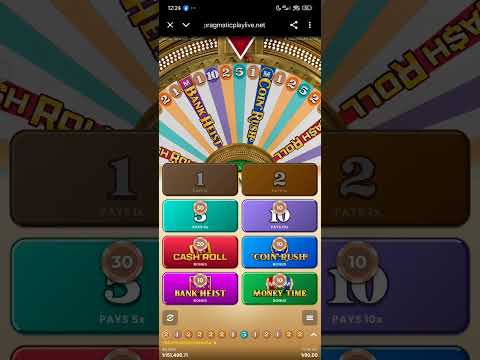
Interactive side bets in live dealer games allow players to wager on non-standard outcomes, such as a specific card suite or a particular dice total, while the main game progresses. Game show-inspired variations, like *Monopoly Live* or *Crazy Time*, shift the focus entirely to bonus rounds and spinning prize wheels, offering immediate, high-volatility rewards. These formats integrate real-time betting decisions alongside the host’s commentary, making each round feel like a standalone event rather than a traditional table game. The experience is purely transactional, relying on random multipliers and player-chosen bonus triggers for engagement.
Advantages of Multi-Camera Angles for Transparency
Multi-camera angles make the action feel completely above board, as you can watch every card shuffle and every roulette spin from multiple viewpoints. This setup lets you switch between a close-up on the dealer’s hands and a wide shot of the entire table, confirming no sleight of hand occurs. It builds trust by putting you in control of what you see, turning passive viewing into an active check for fairness. The ability to glance at different angles mid-round reinforces that the outcome is genuine, making the experience feel more honest and engaging. Enhanced visual verification is the biggest win here, directly addressing any doubts about game integrity.
Bankroll Management and Responsible Wagering
Effective bankroll management begins by allocating only funds you can afford to lose—separate from bills or savings—specifically for casino games. Before playing any slot or table game, define a session budget and a strict loss limit to avoid chasing losses. Wager only small percentages of your total bankroll per bet, typically 1-5%, to withstand variance. Responsible wagering means setting time limits and walking away when you hit your win target or loss cap, treating all outcomes as entertainment costs. Never increase bets to recover losses, and avoid gambling when emotional or under influence. Track every session’s results to maintain discipline over the long term.
Setting Loss Limits and Win Goals for Each Session
Setting firm loss limits and win goals for each session transforms gambling from a desperate chase into a calculated entertainment expense. Before you place a single bet on any casino game, decide the exact amount you are willing to lose and walk away immediately once that threshold is breached. Simultaneously, set a realistic win goal, typically 20-30% above your session bankroll, and have the discipline to cash out upon reaching it. Chasing losses relentlessly erodes your bankroll, but locking in small, consistent victories builds sustainable play. This pre-commitment strategy ensures every session remains a controlled, deliberate decision rather than an emotional reaction.
The Kelly Criterion Versus Flat Betting Strategies
When comparing Kelly Criterion versus flat betting strategies in casino games, the distinction lies in risk optimization versus uniformity. Flat betting assigns a fixed stake per wager, preserving bankroll but limiting growth regardless of perceived edge. The Kelly Criterion, by contrast, adjusts bet size proportionally to the estimated advantage, maximizing long-term compound growth for games like blackjack where edge can be calculated. Because casino games with negative expectation make Kelly unsustainable, its practical use depends on identifying positive-EV opportunities. Flat betting offers simplicity and loss control, while Kelly demands precise edge estimation and discipline to avoid overbetting.
The Kelly Criterion aggressively scales bets with perceived advantage but requires edge certainty; flat betting caps variance at the cost of lower growth potential.
Recognizing Problematic Patterns and Self-Exclusion Tools
Recognizing problematic patterns requires observing personal behaviors like chasing losses, wagering beyond planned limits, or feeling restless when not playing. Self-exclusion tools offer a structured response, allowing players to voluntarily ban themselves from casino platforms for set periods. To activate these tools effectively, follow this sequence:
- Access the « Responsible Gambling » or « Account Settings » section of the casino site.
- Select a self-exclusion duration (e.g., 30 days, 6 months, or permanently).
- Confirm the choice, which typically triggers immediate logout and blocks new deposits.
This direct action interrupts the cycle of impulsive play, providing necessary distance to assess habits. Proactive self-exclusion prevents further harm by enforcing a mandatory cooling-off period.
Emerging Technologies Shaping the Floor
The clatter of chips now syncs with invisible rhythms as sensors and RFID-embedded tables track every bet in real time, letting dealers focus on the human moment while data streams quietly validate payouts. Over at the electronic roulette wheel, haptic feedback panels pulse under a player’s fingertips, mimicking the ball’s skitter across a physical rotor.
The floor itself is learning: biometric mats recognize a high-roller’s gait and gently adjust ambient sound and lighting around their preferred blackjack station before they even sit.
Meanwhile, augmented-reality glass overlays player stats onto a poker table’s felt, turning a simple hand into a living narrative of tells and odds, all without breaking the flow of chips sliding in and out.
Virtual Reality Casinos: Navigating 3D Lobbies and Tables
In a virtual reality casino, movement is controlled via hand controllers or gaze-based teleportation. You physically turn your head to scan 3D lobbies for themed rooms or game tables, selecting a seat by walking your avatar closer. At the blackjack or roulette layout, you reach out to place chips, with haptic feedback confirming each interaction. Spatial audio dynamically adjusts, letting you hear shuffling from nearby tables. Navigating these environments demands learning the platform’s unique locomotion, as some limit movement speed to prevent nausea during play.
Virtual reality casinos replace traditional clicks with embodied navigation: you walk 3D lobbies, sit at tables, and gesture to place bets, requiring mastery of spatial movement and haptic interfaces for intuitive play.
Blockchain and Provably Fair Algorithms in Cryptocurrency Play
Blockchain integration in cryptocurrency play shifts casino game integrity to an immutable verification system. Provably fair algorithms replace trust in operators by allowing players to independently confirm each round’s outcome through cryptographic hashing. A typical sequence runs:
- Player and server each generate a secret seed.
- A combined hash is displayed before the round.
- After the result, the server reveals its seed.
- Player checks the hash against both seeds to validate fairness.
This ensures no retroactive manipulation of spins, deals, or dice rolls, directly preventing house-side result tampering within the game’s execution layer.
Augmented Reality Overlays for Enhanced Card Recognition
Augmented Reality overlays for enhanced card recognition project real-time card values and suit probabilities directly onto the physical felt, using computer vision to analyze a deck’s composition. This technology dynamically highlights potential hand strengths, such as a flush draw, by calculating outs and displaying them as translucent symbols. It eliminates manual tracking errors, allowing players to verify their odds without interrupting the game’s flow. The overlay updates instantly with each card dealt, providing a precise, non-intrusive layer of strategic data.
- Identifies and labels each visible card using image recognition.
- Overlays the current pot odds as a dynamic ratio on the table surface.
- Animates the remaining deck composition to show live probability shifts.
Legal Frameworks and Trustworthy Platforms
For players, a trustworthy platform for casino games is built on transparent operational rules that govern game fairness. You should verify that the platform publishes its house edge and return-to-player percentages for every game, as these are core elements of its legal framework. A reliable site will also have a clear dispute resolution process, detailing how you can challenge a result or a payout. Look for platforms that use certified random number generators and provide verifiable game histories, as these are practical indicators of a binding legal commitment to fair play. Without this transparent framework, your ability to seek recourse is non-existent.
Licensing Jurisdictions: Malta, UK, Gibraltar, and Curacao
When picking a casino to play at, the license tells you who’s watching the game. Malta, UK, Gibraltar, and Curacao are the big four you’ll see. Malta’s MGA and the UKGC are strict, meaning faster payouts and fair play. Gibraltar is popular with big brands, offering solid player protection. Curacao is cheaper for casinos but still gives you basic safety if you stick with known sites. Each one changes how disputes get handled and how quickly you get your money.
Malta, UK, Gibraltar, and Curacao are the main licensing hotspots—each offering different levels of player protection and payout speed.
Audited RNG Certifications from eCOGRA and iTech Labs
Audited RNG certifications from eCOGRA and iTech Labs verify that casino games produce mathematically random outcomes, ensuring no manipulation in deal sequences or reel spins. These independent audits examine source code and statistical variance over millions of rounds, certifying that each hand, spin, or dice roll remains unpredictable. Players relying on these seals avoid platforms where house algorithms could silently skew results against long-term probability models. The provably fair gameplay guarantee from such certification means every bet carries the same chance as stated in the game’s theoretical return table, removing uncertainty about concealed payout adjustments.

Geo-Fencing and Age Verification Protocols
For casino game platforms, location-based age gating acts as a digital bouncer, instantly blocking access if your device’s GPS or IP signals you’re in a restricted region. Age verification protocols then cross-reference your ID documents or biometric data against official registries before a single spin is allowed. Q: Can I bypass geo-fencing using a VPN? A: Reputable casinos use advanced evasion detection that flags VPN traffic, forcing you to disable it or locking the account for security compliance.
Tournaments, Leaderboards, and Competitive Play
In casino games, Tournaments, Leaderboards, and Competitive Play transform solitary sessions into high-stakes races. Instead of battling the house alone, you compete against other players for top prizes, typically on slots, blackjack, or poker. A ticking clock and cumulative scores drive the action; every spin or hand matters as you climb the rankings. The key insight is that skill in bankroll management and game speed often outweighs raw luck here.
Timing your entry during low-competition periods can dramatically increase your chances of earning a leaderboard payout without needing a massive winning streak.
To succeed, monitor live standings, adapt your bet size to catch up, and always check the prize structure—sometimes finishing in the top 20% yields a return, not just first place.
Slot Race Formats and Prize Pool Distribution
Slot race formats typically operate on a leaderboard ranking players by either highest single spin win or total accumulated points over a set period. Prize pool distribution is tiered, with the largest share allocated to the top positions, often from first to third, then tapering down to smaller consolation prizes for mid-table finishers. Prize pool distribution models may be fixed or progressive, where the pool grows from player entry fees or a casino contribution. The race duration varies, commonly spanning hourly, daily, or weekly events.
- Point systems can award one point per spin or base value on bet size multiplied by win percentage.
- Some races feature guaranteed prize pools, ensuring a minimum payout regardless of participant numbers.
- Entry may be free via tournament tickets or require a minimum qualifying bet.
Poker Sit-and-Go Events with Multi-Table Structures
In poker sit-and-go events with multi-table structures, action escalates because players must survive multiple tables to reach the final, single-table showdown. Unlike standard sit-and-gos, these events continue registering new entrants until a set player cap, creating a dynamic field that collapses through simultaneous eliminations. A key advantage is adaptive blind structures, which accelerate as tables merge, forcing constant strategic recalibration. This format rewards both early-table aggression and end-stage patience, demanding you adjust to shifting stack depths and opponent ranges as the field condenses.
| Aspect | Multi-Table Sit-and-Go | Standard Sit-and-Go |
|---|---|---|
| Field Size | Starts larger, often 18–180 players | Fixed single table (6 or 9 players) |
| Structure Flow | Blinds increase as tables break; uneven eliminations | Blinds rise at set intervals; all players see same levels |
| Strategic Demand | Adapt to new opponents after each table merge | Read 99xo stable opponent dynamics |
Blackjack Championship Scoring and Elimination Rounds
Blackjack Championship Scoring typically uses a point system where players earn chips for each hand won against the dealer, with bonuses for blackjacks or doubling down. Elimination rounds follow a structured sequence to reduce the field. Elimination tournament formats often trigger when a player’s chip stack falls below a set threshold, expelling them immediately. The scoring then resets for the next round.
- Players compete in timed rounds, accumulating chips from each hand.
- The lowest chip counts are eliminated at set intervals.
- Survivors advance, with scores zeroed before the next elimination phase.
A knockout hand can instantly end a contestant’s run if they bust or lose a critical double-down.